
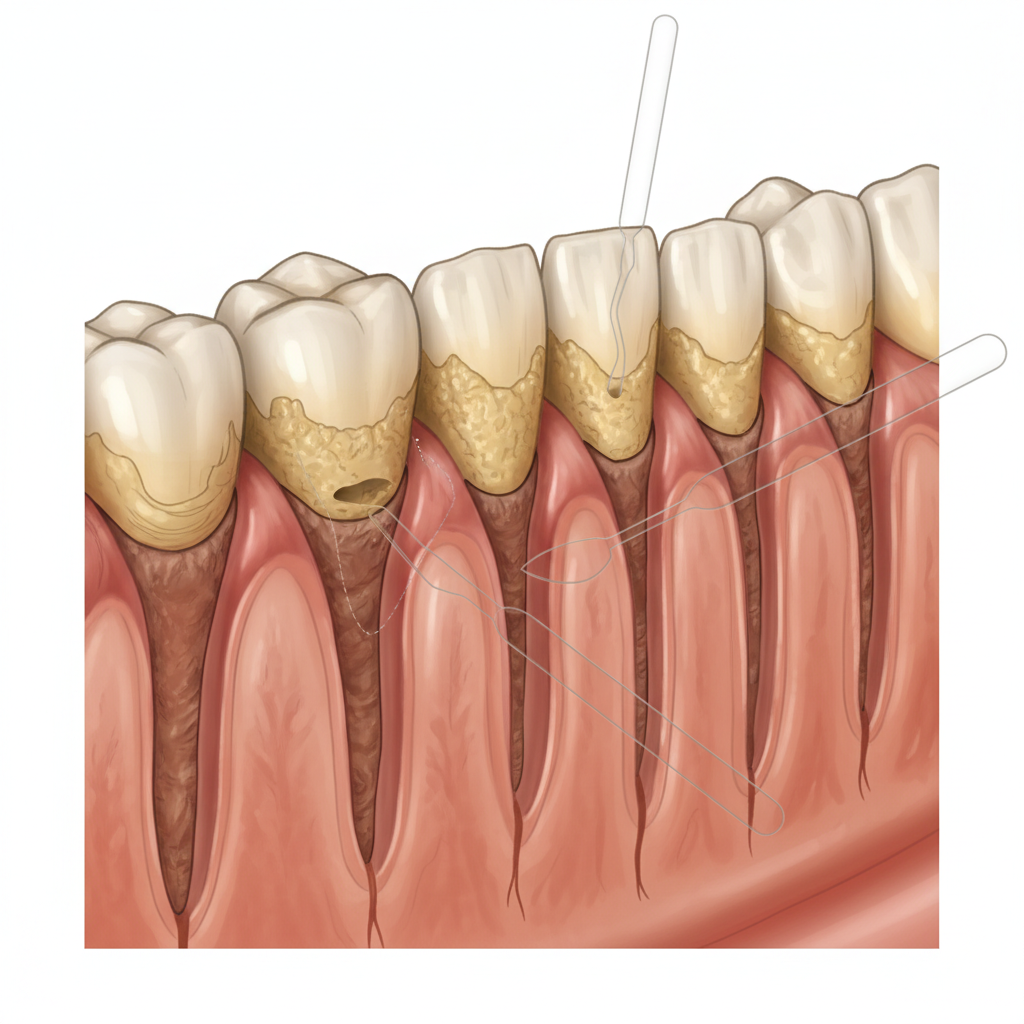
When you first notice bleeding when you brush or floss, it can be easy to ignore. Understanding what happens if gum disease goes untreated helps you see why those early signs matter. Untreated gum disease, also called periodontal disease, progressively damages the gums and bone that support your teeth and can eventually lead to tooth loss and serious health complications if you do not intervene in time [1].
In this guide, you will learn how gum disease progresses from mild to severe, when a deep cleaning such as scaling and root planing becomes necessary, and how timely treatment protects both your smile and your overall health.
Understanding gum disease
Gum disease starts with plaque, a sticky film of bacteria that constantly forms on your teeth. If plaque is not removed regularly with brushing, flossing, and professional cleanings, it hardens into tartar. This buildup irritates your gums and triggers inflammation.
In the earliest stage, known as gingivitis, your gums may appear red, swollen, and bleed easily, but your bone and connective tissues are still intact. At this point, the condition is reversible with proper care and professional treatment [2].
If the inflammation continues and plaque and tartar remain along and under the gumline, gingivitis advances to periodontitis. In this more serious stage, the tissues and bone that hold your teeth in place begin to break down. Periodontitis is not reversible, but with the right periodontal therapy you can halt or significantly slow further damage [3].
Early vs advanced gum disease
Recognizing the difference between early and advanced gum disease helps you understand when regular cleanings are enough and when you may need a deep cleaning.
Early stage: Gingivitis
Gingivitis is the mildest form of gum disease. Common signs include:
- Red, puffy, or tender gums
- Bleeding when you brush or floss
- Persistent bad breath
- Mild gum soreness or sensitivity
At this stage, the inflammation is limited to the gum tissue that surrounds your teeth. There is no permanent loss of bone or attachment yet. With timely professional cleaning and consistent home care, gingivitis can be reversed and your gums can return to a healthy state [4].
If you are at this early stage, your dentist may discuss early stage gum disease treatment with you, which often centers on improved daily hygiene, more frequent cleanings, and close monitoring.
Progressive and advanced stages: Periodontitis
When gum disease is not addressed at the gingivitis stage, it can progress to periodontitis and then to advanced periodontitis. In these stages, the infection and inflammation extend deeper, affecting the bone and connective tissue that anchor your teeth.
You may notice:
- Gums pulling away from the teeth, creating pockets
- Chronic bad breath or a bad taste in your mouth
- Teeth that appear longer due to gum recession
- Sensitivity or discomfort when chewing
- Teeth that feel loose or start to shift
As the disease advances, these periodontal pockets deepen, bacteria multiply, and bone loss accelerates. Once bone loss has occurred around your teeth, the damage is typically irreversible, even though treatment can help stabilize the condition [5].
At this point, regular cleanings are usually not enough. Your dentist may recommend a deep cleaning called scaling and root planing to remove the bacteria and tartar hidden below the gumline.
What happens if gum disease goes untreated
If gum disease goes untreated, the effects go far beyond occasional bleeding gums. The condition becomes more difficult and costly to treat and can ultimately impact your overall health.
Progressive damage to gums and bone
Untreated gum disease causes ongoing inflammation and infection in the tissues surrounding your teeth. Over time, this process:
- Destroys gum tissue, causing the gums to recede
- Breaks down the ligament fibers that attach your teeth to the bone
- Erodes the underlying jawbone that supports your teeth
As the gums pull away, deep pockets form between your teeth and gums. These pockets provide a protected space where bacteria can accumulate and thrive, making the infection worse and harder to control [6].
Once significant bone loss has occurred, the damage is not reversible. Treatment can help manage the infection and preserve your remaining support, but it cannot regrow the lost bone and gum tissue [5].
Loose teeth and tooth loss
As gum disease destroys the structures that hold your teeth in place, they gradually become loose. You might first notice subtle changes, like difficulty chewing on one side or teeth that feel slightly mobile. Over time, they may shift position, creating gaps or changes in your bite.
If the disease continues unchecked, the supporting bone and tissues can be so damaged that teeth cannot be saved and either fall out on their own or require extraction. Many people do not realize that periodontal disease is a leading cause of tooth loss in adults [7].
Once teeth are lost, you may need restorative treatments such as dentures, bridges, or implants, all of which are more complex and costly than addressing gum disease early.
Increased risk of systemic health problems
The impact of untreated gum disease is not limited to your mouth. Chronic oral infection and inflammation can influence your overall health. Bacteria from periodontal pockets can enter your bloodstream and spread to other parts of your body, contributing to systemic inflammation.
Research shows that people with untreated gum disease have a two to three times higher risk of heart attack, stroke, or other serious cardiovascular events [6]. Gum disease can also:
- Make blood sugar harder to control and worsen diabetes
- Increase the risk of respiratory infections such as pneumonia when bacteria are inhaled
- Raise the risk of premature birth and low birth weight in pregnant individuals
Persistent inflammation from untreated gum disease keeps your immune system activated and can increase your risk for various systemic conditions [8].
More complex and costly future treatment
Ignoring early signs of gum disease almost always leads to more intensive treatment later. What could have been managed with improved oral hygiene and routine cleanings may progress to a stage that requires:
- Scaling and root planing
- Periodontal maintenance visits multiple times per year
- Possible gum surgery or regenerative procedures
- Tooth extractions and replacement options
As Marion Family Dental notes, delaying treatment makes gum disease more complex and costly to manage and increases the time required for recovery [9]. Early intervention helps you avoid or minimize these more advanced therapies.
When a deep cleaning becomes necessary
Many people are unsure when regular cleanings are enough and when a deep cleaning is indicated. Understanding the difference helps you make informed decisions about your care.
Deep cleaning vs regular cleaning
A regular cleaning focuses on removing plaque and tartar from the visible surfaces of your teeth and just above the gumline. This type of cleaning is ideal for maintaining healthy gums or managing mild gingivitis.
A deep cleaning, also called scaling and root planing, goes further. It targets hardened deposits and bacteria below the gumline and along the roots of your teeth. If you are wondering about the difference between regular cleaning and deep cleaning, the key distinction is how far under the gums your dental team needs to clean to control the infection.
If your dentist has told you that you have periodontal pockets or bone loss, it is helpful to ask directly: do i need a deep cleaning. They can explain your measurements and show you where disease is present.
Signs you may need scaling and root planing
You might be a candidate for scaling and root planing if you notice:
- Gums that bleed often when you brush or floss
- Persistent bad breath that does not improve with brushing
- Gum recession or teeth that look longer
- Spaces forming between your teeth
- Teeth that feel slightly loose
Clinical signs your dental team looks for include pocket depths greater than 4 millimeters, visible tartar below the gumline, and early bone loss on X rays. If you recognize several of these symptoms, it is worth reviewing the signs you need scaling and root planing and discussing them at your next visit.
Deep cleaning is recommended to stop the destructive cycle of infection and inflammation before it causes more permanent harm [10].
What scaling and root planing involves
Scaling and root planing is the most common non surgical treatment for moderate gum disease. Understanding the process can help you feel more comfortable if your dentist recommends it.
Step by step: What to expect
During scaling and root planing, your dental team carefully removes plaque, tartar, and bacterial toxins from the tooth surfaces and root areas beneath the gumline. The process typically involves:
- Numbing the treatment area with local anesthetic so you remain comfortable.
- Scaling, which is the removal of plaque and tartar from above and below the gumline using specialized instruments.
- Root planing, which smooths the root surfaces so that the gums can reattach more easily and future plaque has a harder time sticking.
- Rinsing and sometimes applying localized medications or antimicrobial agents to reduce bacterial load.
The number of appointments you need depends on how many areas are affected and how advanced your gum disease is. If you are curious about timing, you can learn more about how long does scaling and root planing take.
Comfort, recovery, and results
Many people are concerned about discomfort with periodontal therapy. With proper numbing, most patients tolerate scaling and root planing well. You may have some soreness or sensitivity afterward, but this usually improves within a few days. If you are worried, you can read more about is periodontal therapy painful to know what to expect.
After treatment, your gums typically become less inflamed and may stop bleeding. As the infection is brought under control, pockets can become shallower and easier to clean at home, and your breath often improves. While scaling and root planing cannot restore tissue that has already been lost, it is a critical step in preserving the bone and gums you still have [3].
To maintain your progress, your dentist may place you on a periodontal maintenance schedule with cleanings every three to four months instead of twice per year.
Untreated gum disease creates a destructive cycle of infection and bone loss that ultimately leads to tooth loss. Timely deep cleaning can interrupt this cycle and help protect your long term oral health [10].
Can gum disease be reversed or controlled
Whether gum disease can be reversed depends on how far it has progressed when you begin treatment.
In the gingivitis stage, gum disease is reversible. Professional cleaning, daily brushing and flossing, and sometimes antimicrobial rinses can eliminate the inflammation and restore gum health [11]. If you address the problem early, you may be able to avoid the need for scaling and root planing entirely. You can explore more about this in can gum disease be reversed.
Once the disease has progressed to periodontitis, the condition itself is not reversible. The bone and gum tissue that have been destroyed will not spontaneously grow back. However, you can still:
- Halt or greatly slow further progression
- Reduce pocket depths and inflammation
- Stabilize loose teeth in some cases
- Improve comfort and function
Scaling and root planing, followed by regular periodontal maintenance and consistent home care, is often the foundation of controlling more advanced disease [3].
Preventing progression and protecting your smile
The most effective way to avoid the serious consequences of untreated gum disease is to combine daily home care with regular professional visits and prompt treatment when early signs appear.
Focus on:
- Brushing at least twice daily with a soft toothbrush
- Cleaning between your teeth with floss or interdental cleaners every day
- Seeing your dentist for routine exams and cleanings as recommended
- Following through promptly if your dentist suggests a deep cleaning or other periodontal therapy
If you are unsure about the type of cleaning you need or the financial aspects, reviewing the cost of deep cleaning vs regular cleaning intent keyword and how is gum disease treated can help you prepare and ask informed questions.
Nearly half of adults over 30 have some form of gum disease and a significant portion require more advanced treatment [10]. You are not alone if you are facing these issues, and taking action now can make a measurable difference.
If you are noticing bleeding gums, persistent bad breath, or changes in your gumline, do not wait to see if it improves on its own. Early evaluation and, if needed, scaling and root planing give you the best chance to protect your teeth, avoid surgery or tooth loss, and maintain a healthy smile long term.
References
- (Cleveland Clinic)
- (Scenic City Dentistry, Orange Park Center For Dental Excellence)
- (Scenic City Dentistry)
- (Cleveland Clinic, Scenic City Dentistry)
- (Cleveland Clinic, University Hospitals)
- (Marion Family Dental, Orange Park Center For Dental Excellence)
- (First Hill Dental Center, Orange Park Center For Dental Excellence)
- (University Hospitals)
- (Marion Family Dental)
- (Cleveland Clinic)
- (Cleveland Clinic, Orange Park Center For Dental Excellence)