
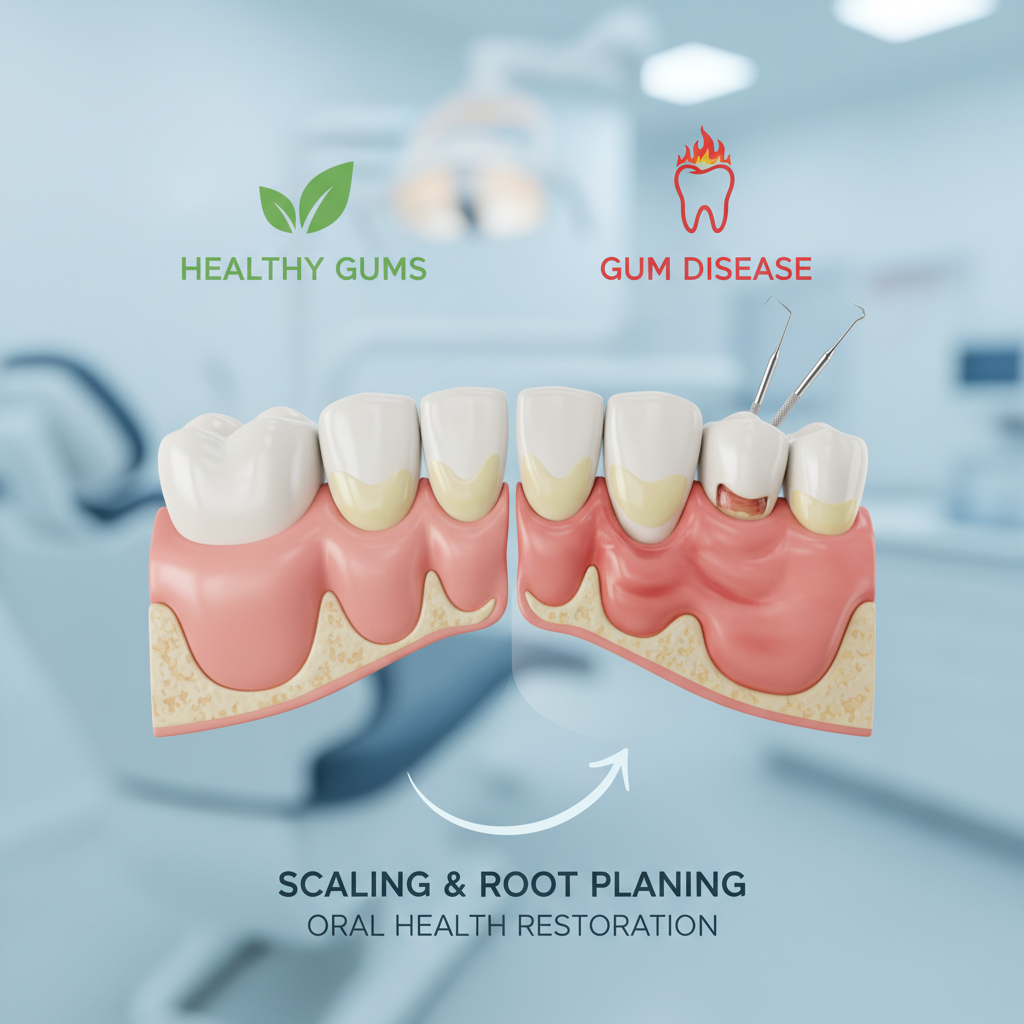
Gum disease can feel alarming. When you see blood in the sink or notice your gums pulling back from your teeth, it is natural to wonder, can gum disease be reversed, and how much damage has already been done.
The honest answer is that some stages of gum disease are fully reversible, while more advanced stages are not. Even when gum disease cannot be reversed, it can almost always be controlled and prevented from getting worse with the right care. Understanding where you are on this spectrum helps you know whether you need routine care, a deep cleaning, or more advanced periodontal treatment.
Understanding the stages of gum disease
Gum disease, or periodontal disease, develops gradually. You typically move through stages, from mild inflammation to permanent damage if it is not treated.
Gingivitis: The reversible stage
Gingivitis is the earliest stage of gum disease. At this point, plaque bacteria along the gumline have started to irritate your gums, but the bone and deeper structures around your teeth are still intact.
Common signs of gingivitis include:
- Red, swollen, or tender gums
- Bleeding when you brush or floss
- Mild bad breath that does not fully go away with brushing
The good news is that gingivitis is completely reversible. According to Cleveland Clinic, this very early stage of periodontal disease can be totally reversed with regular dental cleanings and diligent daily brushing and flossing at home [1]. Other sources agree that with proper home care and professional cleanings, inflammation and bleeding can often resolve within 10 to 14 days [2].
If you address gum problems at this point, you can restore your gum health and avoid permanent damage.
Periodontitis: When damage becomes permanent
If gingivitis is not treated, plaque hardens into tartar under the gums and infection moves deeper. This leads to periodontitis, a more advanced and destructive form of gum disease.
At this stage, you may notice:
- Persistent bad breath
- Gums that recede or pull away from your teeth
- Pockets that form between teeth and gums
- Teeth that feel loose or shift position
- Changes in your bite
Once periodontal disease advances and bone loss occurs, it cannot be fully reversed. The supporting structures around your teeth have been permanently damaged. However, treatment can control the infection and prevent further bone loss [1]. Multiple sources emphasize that advanced gum disease is not curable, but it can be managed so you can keep your teeth and maintain function [3].
Can gum disease be reversed at your stage
Whether gum disease can be reversed in your situation depends on how far it has progressed.
When gum disease is reversible
Your gum disease is likely reversible if:
- Your main symptoms are bleeding, redness, or mild swelling
- You do not have gum recession or loose teeth
- Your dentist does not see bone loss on X rays
In this early phase, improved oral hygiene, professional cleanings, and possibly a focused early stage gum disease treatment plan can restore your gums to health. Professional care is still critical, since plaque that has hardened into tartar cannot be removed at home [4].
When gum disease can only be controlled
If you already have:
- Deeper gum pockets
- Bone loss visible on X rays
- Noticeable gum recession
- Teeth that feel loose or shift
then you have periodontitis. At this point, gum disease cannot be reversed, but it can be treated and controlled so it does not continue to destroy bone and tissue [5].
Treatments like scaling and root planing, sometimes called a deep cleaning, as well as possible surgical procedures, focus on stopping the infection, shrinking pocket depths, and stabilizing your teeth.
Why early intervention matters
You have the most power to reverse gum disease and avoid major treatment when you act early.
Gum disease begins with plaque accumulation along and beneath the gumline. This causes gingivitis, which is marked by inflamed, red, or bleeding gums. If untreated, this inflammation can progress to periodontitis, which damages bone and connective tissue and can eventually lead to tooth loss [6].
Early detection and timely treatment are critical. Regular dental checkups allow your dentist to identify gum disease in reversible stages, often before you have obvious symptoms [7]. This is also the point when improving your home care and getting a thorough professional cleaning can spare you from more complex procedures later.
If you are wondering whether your symptoms have progressed to a point where you need more than a standard cleaning, it may help to review the signs you need scaling and root planing.
When a deep cleaning is needed
Scaling and root planing is a non surgical periodontal treatment that cleans below the gumline and smooths root surfaces. It is more detailed and extensive than a standard cleaning, and it is the most common treatment for early to moderate periodontitis.
Why a regular cleaning is not always enough
Regular professional cleanings are designed to remove plaque and tartar from above the gumline and slightly below it. They help keep your mouth healthy and are essential for prevention.
Once tartar builds up deeper under the gums and gum pockets form, a regular cleaning can no longer reach all the infected areas. At that point, a deep cleaning becomes necessary to remove bacteria and hardened deposits from the root surfaces.
If you are unsure how these two procedures differ in scope and purpose, you can read more about the difference between regular cleaning and deep cleaning.
How scaling and root planing works
During scaling and root planing, your dentist or hygienist uses specialized instruments to:
- Carefully clean plaque and tartar from below the gumline
- Smooth rough root surfaces so gums can reattach more easily
- Flush out pockets where bacteria hide and multiply
Deep dental cleanings like this remove plaque and tartar from teeth and smooth the roots so gums can begin to heal and reattach. This helps prevent mild gum inflammation from advancing to more destructive stages [8].
Professional dental cleanings, including scaling and root planing, do not damage your gums. Instead, they remove the bacteria and deposits that are causing inflammation and bone loss, and they are among the best defenses against gum disease [9].
If you are trying to understand the time commitment involved, you can learn more about how long does scaling and root planing take.
What scaling and root planing can and cannot do
Deep cleaning is one of the most important tools for stopping gum disease, but it has limits.
What a deep cleaning can achieve
With scaling and root planing, you can typically:
- Reduce or eliminate active gum infection
- Decrease bleeding, swelling, and tenderness
- Shrink pocket depths in mild to moderate cases
- Improve breath and overall gum health
- Stabilize early bone loss and help prevent further damage
Professional cleanings, both routine and deep, play a preventive role by removing tartar that brushing and flossing cannot reach or remove [10].
What a deep cleaning cannot fix
Scaling and root planing cannot:
- Regrow bone that has already been lost
- Restore gums that have significantly receded
- Completely eliminate very deep pockets in severe cases
Receding gums will not regrow on their own. While scaling and root planing promotes healing and healthier, more stable gums, severely receded areas sometimes need grafting or other surgical treatments [11].
In advanced periodontal disease, surgical options such as pocket reduction surgery, gum grafting, bone grafting, and guided tissue regeneration can help remove deep infection and encourage some regeneration of bone and gum tissue. These treatments can improve oral health and help you keep your teeth, but they do not fully cure gum disease [1].
If you are weighing whether you personally need this type of procedure right now, the guide do i need a deep cleaning can help you prepare for a conversation with your dentist.
Early gum disease is often reversible. Advanced gum disease is not. In both cases, professional cleanings and good home care are what keep infection under control and protect your teeth from future damage.
What to expect during periodontal treatment
Understanding what treatment involves can make it easier to move forward and get the care you need.
Discomfort and healing
Many people worry that periodontal therapy will be painful. You should know that:
- Local anesthesia is typically used during scaling and root planing, so you should feel pressure and vibration, not sharp pain
- You may experience mild soreness or sensitivity for a few days after treatment
- Any discomfort usually improves quickly as your gums begin to heal
Patients with gum disease sometimes feel more sensitivity during the first few cleanings, because tartar and inflamed tissue make the area tender. Over time, as your gums heal and tartar is removed, discomfort generally decreases and cleanings become easier [6].
If anxiety about discomfort is holding you back, you might find it helpful to explore more details in is periodontal therapy painful.
Frequency and cost considerations
Deep cleaning is often done in sections of your mouth, sometimes over two or four visits, depending on how much buildup and inflammation you have. After your initial treatment, you may be placed on a maintenance schedule, for example every three or four months, to keep bacteria under control.
Because a deep cleaning is more extensive than a standard cleaning, the cost is higher. However, controlling gum disease before it reaches a severe stage can help you avoid much more expensive procedures like surgery, tooth extractions, and tooth replacement. If you are comparing options, you can review the cost of deep cleaning vs regular cleaning intent keyword for a clearer picture.
Your role in reversing and controlling gum disease
Professional cleanings are only part of the solution. What you do at home each day is just as important.
Daily oral hygiene habits
Good oral hygiene is essential in both preventing and managing gum disease. Sources consistently recommend:
- Brushing twice a day with a soft bristled toothbrush at a 45 degree angle to the gumline
- Flossing once daily, using a C shape motion to hug each tooth
- Using antimicrobial mouthwash if recommended
- Cleaning between teeth with floss, interdental brushes, or water flossers
- Gently brushing or scraping your tongue to reduce bacteria
These habits help remove plaque before it hardens into tartar, keeps gums free from irritation and infection, and plays a critical role in reversing gingivitis and preventing progression to periodontitis [12].
Lifestyle factors that affect your gums
Some lifestyle choices make it harder for your gums to heal or increase your risk of disease. For example, smoking restricts blood flow to the gums and impairs your immune response, which makes developing and recovering from gum disease more difficult [2].
A balanced diet, good control of conditions like diabetes, and avoiding tobacco all support gum health and help prevent periodontal disease from becoming more advanced [13].
The importance of long term maintenance
Even after your gums have healed from gingivitis or been stabilized after scaling and root planing, maintenance is crucial. Routine professional teeth cleanings every six months, or more frequently if recommended, are critical for preventing gum disease from advancing again. They remove plaque and tartar that brushing and flossing cannot fully eliminate on their own [6].
If you are curious about treatment options beyond cleaning, you can learn more in how is gum disease treated. It is also helpful to understand what happens if gum disease goes untreated so you can see the value of staying consistent with care.
Moving forward with confidence
To bring it all together, can gum disease be reversed. Yes, in the early stage of gingivitis, it can. Once you reach periodontitis, gum disease cannot be fully reversed, but it can almost always be treated and controlled so you keep your teeth and protect your health.
Your next step is simple. If you have any signs like bleeding gums, bad breath, or gum recession, schedule a dental exam and cleaning. Ask whether your symptoms are limited to gingivitis or whether deeper pockets or bone loss are present. From there, you and your dental team can decide if a standard cleaning, scaling and root planing, or another periodontal treatment is right for you.
Acting now, rather than waiting, is what gives you the best chance to reverse early disease, avoid surgery or tooth loss, and maintain a healthy, comfortable smile for years to come.
References
- (Cleveland Clinic)
- (Tyler Family Dental)
- (Brennan Dental, Dentist of Visalia)
- (Premier Periodontics)
- (Cleveland Clinic, Brennan Dental)
- (Eagle Falls Dentistry)
- (Dentist of Visalia)
- (PerioCafe)
- (Brennan Dental, Eagle Falls Dentistry)
- (Premier Periodontics, PerioCafe)
- (Brennan Dental, Cleveland Clinic)
- (Premier Periodontics, Tyler Family Dental, PerioCafe)
- (Premier Periodontics, Dentist of Visalia)