Why the cost of deep cleaning vs regular cleaning matters for you
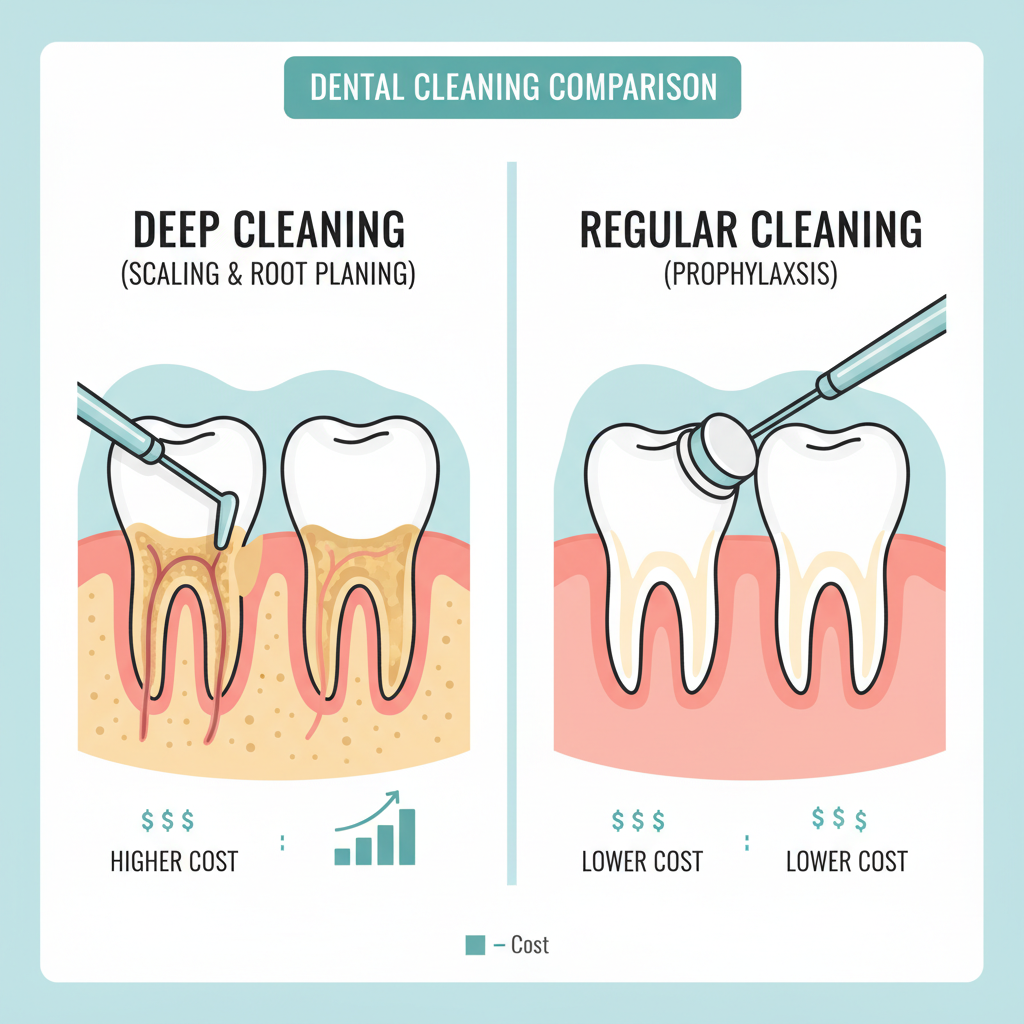
If you are comparing the cost of deep cleaning vs regular cleaning, you are probably already dealing with bleeding gums, bad breath, or gum tenderness and trying to decide how serious it is. A regular dental cleaning is a routine preventive visit. A deep cleaning, also called scaling and root planing, is a medical treatment for active gum disease.
Understanding how these two procedures differ, when you actually need a deep cleaning, and what each typically costs helps you make informed decisions about your oral health and your budget.
What happens in a regular cleaning vs a deep cleaning
Before you can compare the cost of deep cleaning vs regular cleaning, it helps to be clear on what you are paying for.
What a regular dental cleaning includes
A regular cleaning is preventive. You usually have it every 6 months when your gums are healthy or have only mild inflammation.
During a standard cleaning, your hygienist:
- Removes soft plaque and hardened tartar from the visible tooth surfaces and just above the gumline
- Polishes the teeth to smooth away minor surface stains
- May apply fluoride or review home care if needed
Regular cleanings are designed to maintain gum health, help prevent gum disease, and manage early gingivitis before it progresses [1]. If you want a detailed clinical comparison, you can also review the difference between regular cleaning and deep cleaning.
What a deep cleaning (scaling and root planing) includes
A dental deep cleaning is very different. It is a therapeutic procedure for gum disease, not a routine polish.
In scaling and root planing, your dentist or hygienist:
- Numbs the area with local anesthetic
- Cleans plaque, tartar, and bacteria under the gums, along the tooth roots
- Smooths the root surfaces so bacteria have fewer places to hide
- May place localized medications if deep infection is present
Deep cleaning is recommended when you have gum pockets, bone loss, or other clinical signs of periodontitis, not just mild gingivitis [2]. It is often completed over two or more appointments, sometimes one side of the mouth at a time, to thoroughly treat each area [3].
If you are unsure which you need, it may help to first read about the signs you need scaling and root planing.
Early gum disease vs advanced gum disease
Cost depends on severity. To understand why deep cleaning is more expensive, you need to understand how gum disease progresses.
Early gum disease: gingivitis
Gingivitis is inflammation of the gums without permanent bone loss. Common signs include:
- Gums that bleed when you brush or floss
- Mild redness or puffiness
- Occasional bad breath
At this stage, regular professional cleanings plus improved home care often control the problem. You may not need a deep cleaning if there is no deep pocketing or bone loss. That is why consistent early stage gum disease treatment is so important.
Advanced gum disease: periodontitis
Once bacterial plaque sits under the gumline for long enough, it can lead to:
- Pockets between teeth and gums that measure more than 4 mm
- Bone loss visible on dental X‑rays
- Gum recession, teeth looking longer
- Looseness or shifting of teeth
This is periodontitis. At this point, regular cleaning above the gums cannot reach the infectious deposits, so a deep cleaning is medically necessary to remove bacteria and tartar below the gumline [2].
If periodontitis is not treated, you are essentially choosing the long‑term cost of bone loss, painful infections, and possibly extractions and tooth replacement. You can learn more about those consequences in what happens if gum disease goes untreated.
Cost of regular cleaning vs deep cleaning
Fees vary by region, provider, and insurance, but multiple sources agree on the relative cost difference between regular cleaning and deep cleaning.
Typical cost range for regular dental cleanings
Many dental practices structure pricing in a similar way to house cleaning, where maintenance visits cost less than intensive first‑time work. For residential cleaning, regular maintenance visits are at the lower end of the price range because less time and effort are needed each session [4]. Dental care works the same way. Preventive cleanings are shorter and simpler than periodontal therapy.
In a typical general dental office, a regular cleaning visit includes:
- Periodic exam
- X‑rays at appropriate intervals
- Prophylaxis (the professional term for a standard cleaning)
The exact fee depends on your area and insurance coverage. Many dental insurance plans treat regular cleanings as preventive care and cover them at or near 100 percent, often twice per year, as noted by Woodland Hills Family Dentistry [3]. Your out‑of‑pocket cost may be very low or even zero if you stay in network and maintain regular appointments.
Typical cost structure for deep cleanings
A deep dental cleaning is priced differently because it is more complex, more time intensive, and often done by quadrants or halves of the mouth.
Several patterns apply across healthcare and service industries:
- More labor hours and more intensive work increase cost
- Specialized procedures cost more than routine maintenance
- Treating a problem early costs less than waiting until it is advanced
You see this clearly in home cleaning. Deep house cleaning usually costs 50 to 100 percent more than standard cleaning because it involves more labor, more detailed work, and more time [5]. The same logic applies to periodontal deep cleanings compared to regular dental cleanings.
For dental deep cleanings:
- Fees are usually charged per quadrant, upper right, upper left, lower right, lower left
- Each quadrant requires local anesthesia and meticulous removal of deposits under the gums
- Multiple appointments are often needed [3]
Because of this complexity and time, the cost per visit is higher than a standard cleaning and the total treatment cost is greater, especially if more than one quadrant requires treatment.
How insurance usually treats deep cleaning vs regular cleaning
Insurance companies view these procedures differently.
- Regular cleaning is preventive. It is usually fully covered, subject to frequency limits.
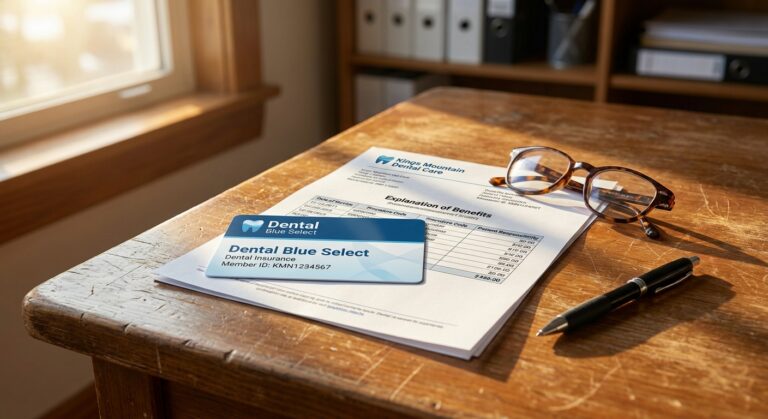
- Deep cleaning is periodontal therapy. It is covered as a necessary treatment only when gum disease is diagnosed. Coverage is often in the 50 percent to 80 percent range, with you paying the remaining portion plus any deductible, although exact percentages depend on your specific plan.
Woodland Hills Family Dentistry notes that regular cleanings are typically covered as preventive care, while deep cleanings can involve additional out‑of‑pocket expenses even when they are medically necessary [3]. Marina Dentistry also notes that many insurance plans help with deep cleanings once periodontal disease is documented, which can soften the financial impact [6].
If you have insurance, your dentist can submit a pre‑treatment estimate so you know your exact share before you decide.
Why deep cleaning costs more than regular cleaning
It can be tempting to focus only on the price tag. Understanding why deep cleaning costs more can help you see what you are actually investing in.
Time and number of visits
A standard cleaning is typically finished in about 45 to 60 minutes in a single visit [3]. Deep cleaning is more involved. It is often completed in:
- Two visits, for right side and left side, or
- Four visits, one quadrant at a time
Each of these appointments can be similar in length to or longer than a standard cleaning because the hygienist is working beneath the gumline in a more delicate environment.
Complexity of the procedure
During deep cleaning, your provider:
- Works in infected, inflamed tissues
- Manages bleeding and patient comfort
- Carefully smooths root surfaces so the gums can reattach
This is technically more demanding than cleaning above the gumline. It is comparable to the difference between regular tidying at home and moving appliances and scrubbing grout during a deep house cleaning. Smart Choice Cleaning explains that deep cleaning services in homes involve more time, meticulous attention to detail, and stronger products than regular maintenance [7]. Periodontal deep cleaning is similar in concept, with specialized tools and techniques.
Level of disease and risk
By the time you need scaling and root planing, bacteria have already caused damage below the gumline. Untreated, that process can lead to:
- Progressive bone loss
- Loose teeth
- Painful infections
- Eventually extractions and more complex restorative care
Treating gum disease at the deep cleaning stage is an investment that often prevents the need for gum surgery or tooth replacement later. Marina Dentistry notes that early periodontal treatment with deep cleaning is usually far less expensive than treating advanced gum disease or tooth loss [6].
Weighing cost vs long‑term value
When you compare the cost of deep cleaning vs regular cleaning, it can feel like deep cleaning is simply “more expensive.” It helps to step back and look at what each really does for you.
Regular cleanings help keep healthy gums healthy, while deep cleanings are a medical treatment to stop active disease and protect your teeth.
The value of staying in preventive care
If your gums are currently healthy or only mildly inflamed, regular cleanings and good home care are your best financial and medical strategy. By staying on schedule:
- You usually pay less per visit
- Insurance often covers most or all of the cost
- You greatly reduce the chance of ever needing periodontal surgery or tooth replacement
Woodland Hills Family Dentistry emphasizes that maintaining regular cleanings helps prevent progression to advanced gum disease and the need for costlier deep cleaning and other treatments later on [3].
The value of treating gum disease promptly
If your dentist has recommended scaling and root planing, that means gum disease is already present at a level a regular cleaning cannot fix. Delaying treatment may save money this month, but it raises the long‑term cost.
Deep cleaning:
- Removes bacteria and tartar where your toothbrush cannot reach
- Allows inflamed gums to heal and reattach
- Often stabilizes bone levels and helps save your teeth
Sensational Smiles notes that after a deep cleaning for gum disease, your dentist may suggest periodic maintenance to prevent disease from returning [1]. This ongoing plan is still usually less costly and less invasive than treating advanced breakdown after years of delay.
If you are wondering whether the procedure is tolerable, you can read more about is periodontal therapy painful and how long does scaling and root planing take.
How to know if you actually need a deep cleaning
Because deep cleaning is a larger investment than a regular cleaning, it is reasonable to ask whether you truly need it.
Your dentist bases the recommendation on:
- Gum measurements, called probing depths
- X‑rays that show bone levels
- Bleeding, tartar buildup, and clinical signs of infection
Marina Dentistry stresses that deep cleaning should only be suggested when it is clinically necessary, based on those measurements and findings, to avoid overtreatment and unnecessary costs [6].
If you receive a recommendation for scaling and root planing, you can ask:
- What are my deepest pocket measurements
- Do my X‑rays show bone loss
- Which teeth or areas are most affected
- What happens if I choose not to treat this now
You can also explore our guide, do i need a deep cleaning, for more detail on how dentists make this decision.
Making deep cleaning more affordable
If your dentist confirms that you need a deep cleaning, there are ways to make the cost more manageable.
Use your insurance benefits wisely
- Ask the office to submit a pre‑estimate to your insurance.
- Find out whether it makes sense to stage treatment across benefit years for maximum coverage.
- Confirm which dental codes will be used so you can see exact coverage percentages.
As noted earlier, many plans offer significant coverage for deep cleaning once periodontal disease is diagnosed [6].
Discuss phasing and payment options
Talk with your dental team about:
- Treating the most severe quadrants first
- Spacing visits over a few weeks to fit your budget
- In‑office payment plans or third‑party financing
Because deep cleaning is typically done in sections anyway, there is often some flexibility without compromising your outcome.
How deep cleaning fits into long‑term gum health
Scaling and root planing is not a one‑time cure for gum disease. It is the first major step in controlling infection so your gums can heal.
After successful deep cleaning, your dentist may recommend:
- Periodontal maintenance visits every 3 to 4 months instead of twice a year
- Targeted home care instructions and tools, such as interdental brushes or water flossers
- Monitoring of pocket depths and bone levels over time
Sensational Smiles notes that periodic deep cleanings may be suggested as part of a maintenance plan for patients who have had gum disease, to prevent recurrence [1]. This approach is far less invasive and less expensive than trying to repair extensive damage later.
You can learn more about this broader picture in how is gum disease treated and can gum disease be reversed.
Taking your next step
Comparing the cost of deep cleaning vs regular cleaning is ultimately about understanding where your gums are today and what you are trying to prevent in the future.
- If your gums are healthy, regular cleanings are the most cost‑effective way to keep them that way.
- If you already have periodontitis, deep cleaning is a necessary medical treatment that helps you avoid more invasive and expensive procedures later.
If you are noticing bleeding gums, bad breath, or gum recession, the most important step is not to guess. Schedule an evaluation, ask your dentist to explain your findings, and use resources such as do i need a deep cleaning to guide your questions.
Early, informed action is the most reliable way to protect both your smile and your long‑term dental costs.