
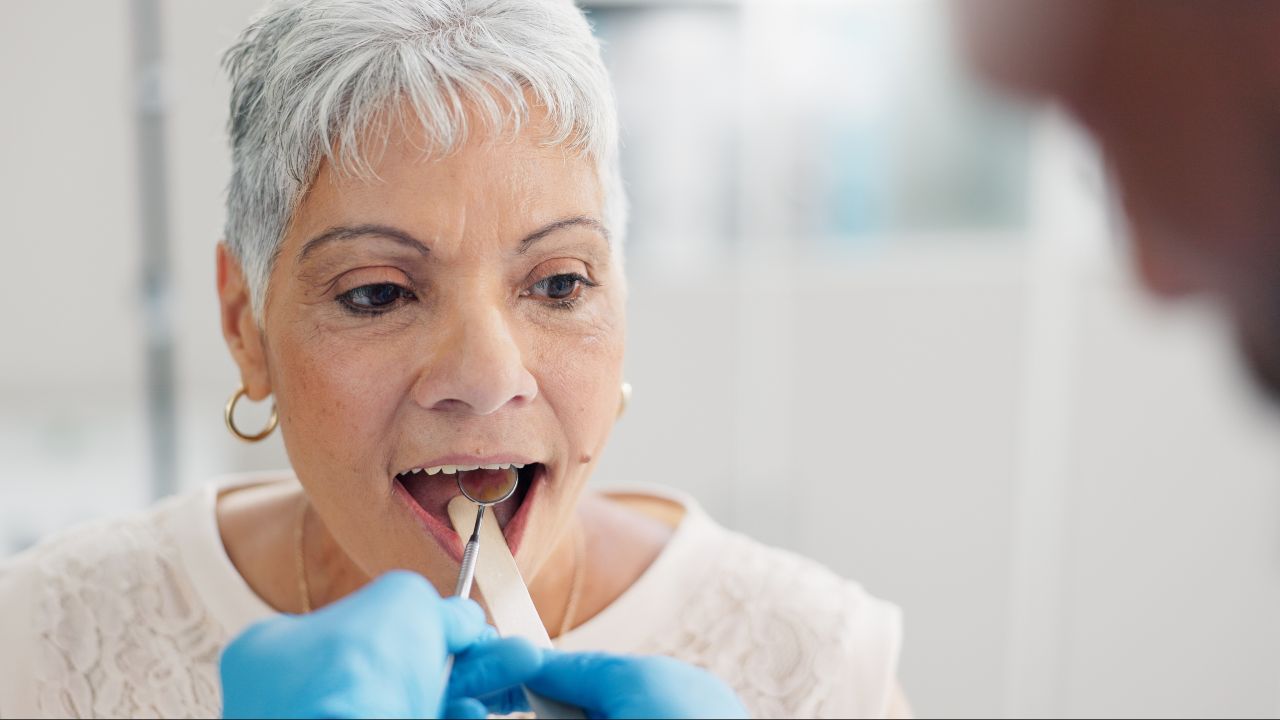
Why oral cancer screening belongs in your routine care
When you think about preventive dental care, you probably picture a dental cleaning and exam or professional teeth cleaning to keep cavities and gum disease away. An oral cancer screening dentist adds another critical layer of protection. During a simple visit, your dentist can look for early signs of oral cancer or precancerous changes in your mouth, often before you feel any symptoms.
Nearly 54,000 Americans are diagnosed with oral or oropharyngeal cancer each year, and the overall five‑year survival rate is about 57%. Early detection gives you the best chance for successful treatment. Building oral cancer screenings into your regular routine dental checkup helps you stay ahead of risks rather than reacting after a problem has already progressed.
What an oral cancer screening dentist does
An oral cancer screening is a focused part of a broader comprehensive dental exam. Your oral cancer screening dentist uses both a visual exam and a hands‑on evaluation to check for anything unusual.
During a typical screening your dentist or hygienist will:
- Examine the lining of your cheeks, gums, lips, tongue, and the floor and roof of your mouth for red or white patches, sores, or color changes
- Ask you to move your tongue and open wide so they can see all areas, including the sides of the tongue and back of the throat
- Gently palpate (press) the tissues inside your mouth, under your tongue, and along your jawline, neck, and throat to check for lumps, thickened areas, or tenderness
In many practices, this process takes less than five minutes and fits naturally into your preventive dental care services. Some dentists may also use special dyes or lights to highlight abnormal tissue, although it is not yet clear whether these tools offer significant benefits beyond a thorough visual and tactile exam.
If your dentist notices an area that looks suspicious and does not improve, you may be referred to a specialist for a biopsy. Biopsies usually confirm a diagnosis within a few days.
Why early detection matters for your health
Oral cancer often starts silently. Early‑stage lesions can be painless and easy to miss on your own. Yet these early stages are when treatment is generally most effective and less invasive.
The dental community in the United States includes more than 100,000 dentists, and about 60% of the population sees a dentist every year, which creates frequent opportunities to spot changes early. Despite this, fewer than 15–25% of regularly visiting patients report having had an oral cancer screening. Choosing a dentist who takes screenings seriously helps close this gap.
When you stay consistent with checkups and screenings, you benefit in several ways:
- Abnormal areas can be identified before they become painful or interfere with eating, speaking, or swallowing
- Precancerous lesions can sometimes be treated before they develop into cancer
- If cancer is present, it is more likely to be diagnosed at an earlier, more treatable stage
Oral cancer screening is not a guarantee that cancer will never occur, and it cannot distinguish with certainty between harmless and dangerous sores. That is why suspicious lesions that last 14 days or longer should be evaluated more closely, often with a biopsy by an oral pathologist. Your dentist coordinates this process so you are not navigating it alone.
Any sore, patch, or lump in your mouth that has not healed within two weeks deserves professional attention, especially if you use tobacco or drink heavily.
What happens during an oral cancer screening visit
Your oral cancer screening usually takes place during your regular dental cleaning and exam or routine dental checkup. It is quick, noninvasive, and does not require special preparation.
Step 1: Health history and risk review
Your dentist or hygienist will ask about your medical history and lifestyle factors, including:
- Tobacco use in any form
- Alcohol consumption
- History of HPV infection, especially HPV16, which is a significant risk factor
- Previous cancer diagnoses or radiation treatment to the head and neck
This conversation helps your dentist decide how frequently you should be screened and whether any particular areas need closer monitoring.
Step 2: Visual examination of your mouth
Next, your dentist uses a bright light and mirrors to carefully inspect your:
- Lips and the border where lip and skin meet
- Gums and inner cheeks
- Roof of your mouth and back of your throat
- Top, sides, and underside of your tongue
- Floor of your mouth
They look for color changes, ulcers, rough patches, or growths. High‑risk sites such as the sides of the tongue, floor of the mouth, and soft palate receive special attention.
Step 3: Palpation of soft tissues and lymph nodes
Your dentist then gently feels:
- Inside your mouth, including under your tongue
- Along your jawline
- In your neck and under your chin
This helps detect lumps, thickened areas, or enlarged lymph nodes that might indicate an underlying problem. A complete screening of the face, oral cavity, and neck typically takes less than five minutes.
Step 4: Next steps, if anything is found
If your dentist sees something that looks unusual, you might be asked to return in two weeks to see whether it has healed or changed. Persistent lesions, especially red patches (erythroplakia), white patches (leukoplakia), or firm masses, may require referral to a specialist for a biopsy.
You will have a chance to ask questions so that you understand the findings and follow‑up plan.
Who should see an oral cancer screening dentist
Every adult can benefit from routine oral cancer screenings. Organizations differ on whether to recommend population‑wide screening for people with no risk factors, in part because there is not yet definitive evidence that screening reduces mortality across the entire population. However, expert groups such as the American Academy of Oral Medicine consider a visual and tactile oral mucosal exam to be a standard part of initial and recall dental visits for all patients.
Your individual risk increases if you:
- Use cigarettes, cigars, pipes, chewing tobacco, or snuff
- Drink alcohol heavily or regularly
- Have a history of HPV infection, especially HPV16
- Have had oral cancer before
Historically, alcohol and tobacco use account for about 75% of oral, head, and neck cancers, but there is also a growing number of HPV‑positive cancers in younger, non‑smoking patients under 50. Because of this shift, dentists are encouraged to screen all adults opportunistically, not only those with obvious risk factors.
If you have higher risk, your dentist may recommend more frequent screenings, just as they might suggest more frequent gum disease treatment or periodontal therapy dentist visits if you have a history of periodontal problems.
Signs and symptoms you should never ignore
Your dentist is your first line of defense, but you also play an important role by paying attention to changes in your own mouth between visits. Contact your dentist promptly if you notice:
- A sore, ulcer, or patch in your mouth that does not heal within two weeks
- Red, white, or speckled areas on your gums, tongue, or inner cheeks
- A lump, thick area, or rough spot that was not there before
- Difficulty chewing, swallowing, or moving your tongue or jaw
- Persistent hoarseness, sore throat, or feeling that something is stuck in your throat
- Numbness or pain in your lips, tongue, or other areas of your mouth
- Swelling in the jaw or neck, or loose teeth without a clear reason
Many of these issues are not cancer. Mouth sores can result from biting your cheek, irritation from a sharp tooth, or infections. At the same time, an oral exam alone cannot always distinguish between cancerous and noncancerous sores, so concerning areas often need biopsy to confirm the diagnosis.
The key is not to wait and hope symptoms resolve on their own. If something feels off, scheduling an appointment is a safer choice.
How oral cancer screening fits into preventive dental care
A relationship with a preventive focused practice, such as Tilley Family Dentistry, helps you manage all aspects of your oral health in one place. Oral cancer screening is one part of a larger strategy that also includes:
- Regular professional teeth cleaning to control plaque and tartar
- Scaling and root planing treatment or visits with a deep teeth cleaning dentist if you have periodontal pockets
- Ongoing periodontal therapy dentist support and bleeding gums treatment when needed
- Fluoride treatment dentist and dental sealants for kids to strengthen teeth and prevent decay
- A custom nightguard for teeth grinding to protect your teeth if you clench or grind at night
By staying with the same practice over time, your dentist becomes familiar with your normal oral tissues. That familiarity makes it easier to notice subtle changes that might signal an early problem. Consistent records, photos, and exam notes also make it simple to compare past and current findings.
When you schedule your preventive dental care services at regular intervals, you are not just keeping your smile looking good. You are also giving your dentist the chance to screen for conditions that affect your long‑term health and quality of life.
Here is how these services work together:
| Preventive service | Main goal | How it supports cancer screening |
|---|---|---|
| Dental cleaning and exam | Remove plaque and check teeth and gums | Creates a set time for visual and tactile screening of your mouth |
| Periodontal therapy | Control gum infection and inflammation | Reduces chronic irritation that can complicate tissue evaluation |
| Fluoride and sealants | Strengthen enamel, prevent decay | Keeps teeth healthy so focus can remain on detecting subtle soft‑tissue changes |
| Nightguards | Protect teeth from grinding | Prevents fractures and soft tissue trauma that can mimic other problems |
When you think about your next checkup, it can help to see it as a total wellness visit for your mouth, not simply a cleaning.
What to expect from Tilley Family Dentistry as your long‑term partner
Choosing an oral cancer screening dentist is about more than a single visit. You are selecting a team that will track your oral health year after year and guide you through any concerns that come up.
At a prevention focused family practice, you can expect:
- A thorough comprehensive dental exam that includes oral cancer screening at both new patient and recall visits
- Clear explanations of what your dentist sees, so you know what is normal in your mouth and what will be monitored
- Personalized recommendations for how often you should return based on your risk factors and overall oral health
- Coordination with oral surgeons, ENTs, or oncologists if an area requires biopsy or specialized care
You also gain support for everyday prevention, from gum disease treatment to fluoride treatment dentist visits, so you are not navigating decisions about your teeth and gums on your own.
If it has been a while since your last routine dental checkup, or if you have never been told you received an oral cancer screening, this is a good time to schedule. A simple, painless exam can provide reassurance and, if needed, an early warning that makes a real difference.
By partnering with an oral cancer screening dentist who prioritizes prevention, you take an active role in protecting both your smile and your long‑term health.


